The Pure Spanish Horse and why it is the soul of Andalusia
A breed preserved by monks since 1476. Today, the more than ten horses at the cortijo descend directly from those Cartujano lineages.
When a visitor walks into the stables after the show, the first thing they say isn't "how beautiful." It's: "they let me touch them." And they do. The Pure Spanish Horse — the Cartujano, in its most coveted strain — is one of the most balanced horses in the world. Not by chance: it's been bred for that for over five centuries.
Origin in 1476
In 1476, the Carthusian monks of Jerez de la Frontera began breeding horses systematically, selecting the noblest, most balanced and most obedient individuals. They wanted a horse for fieldwork, for vaquera dressage, and, when the time came, for war. What they ended up with was something different: a horse that could dance.
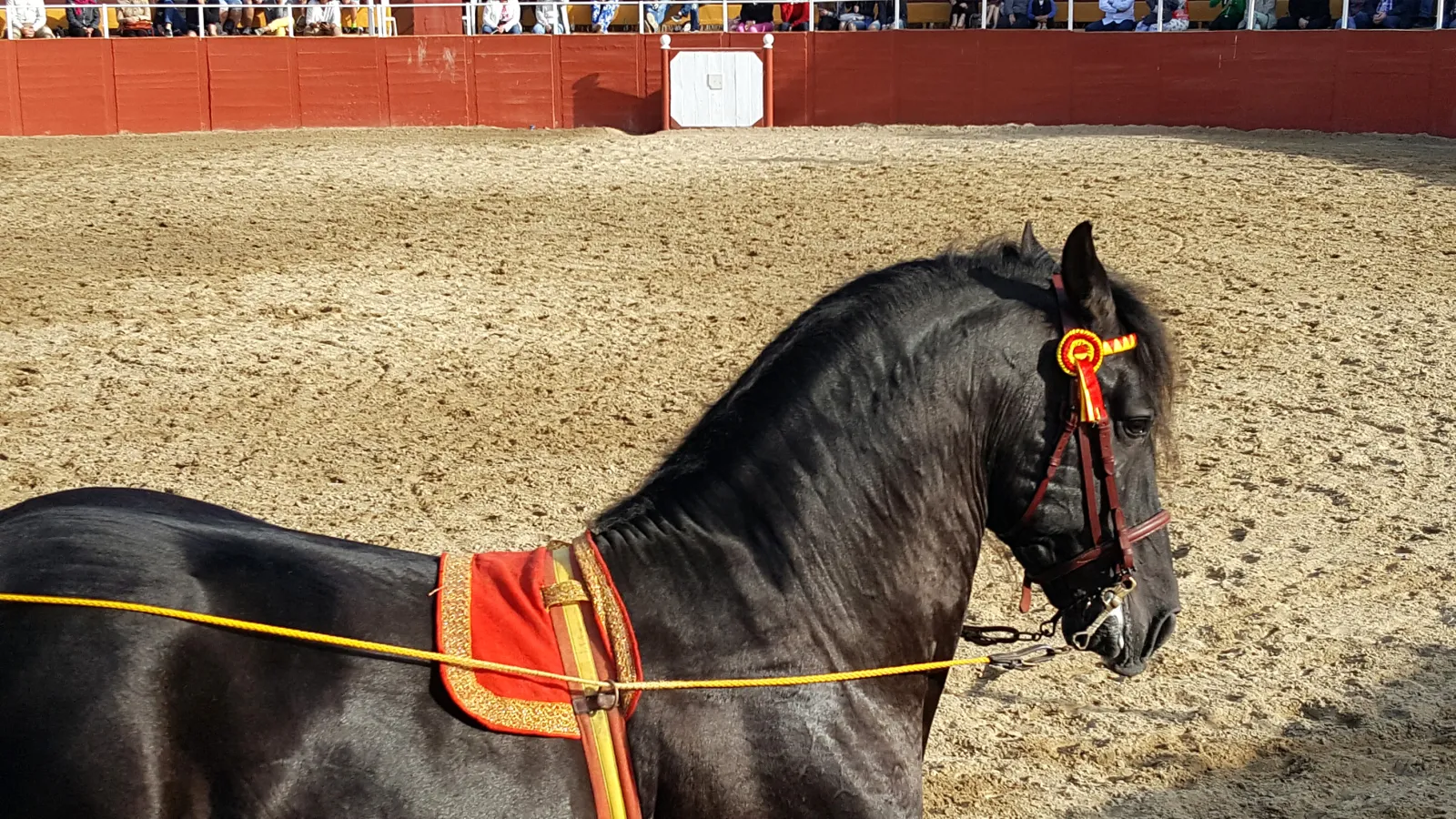
For centuries, European monarchs competed to acquire a Cartujano. Philip II sent specimens to courts across half the continent. The horses in Velázquez's paintings are, almost without exception, Spanish. The Spanish Riding School of Vienna — the most prestigious in the world — still works today with direct descendants of those horses.
The horses of the cortijo
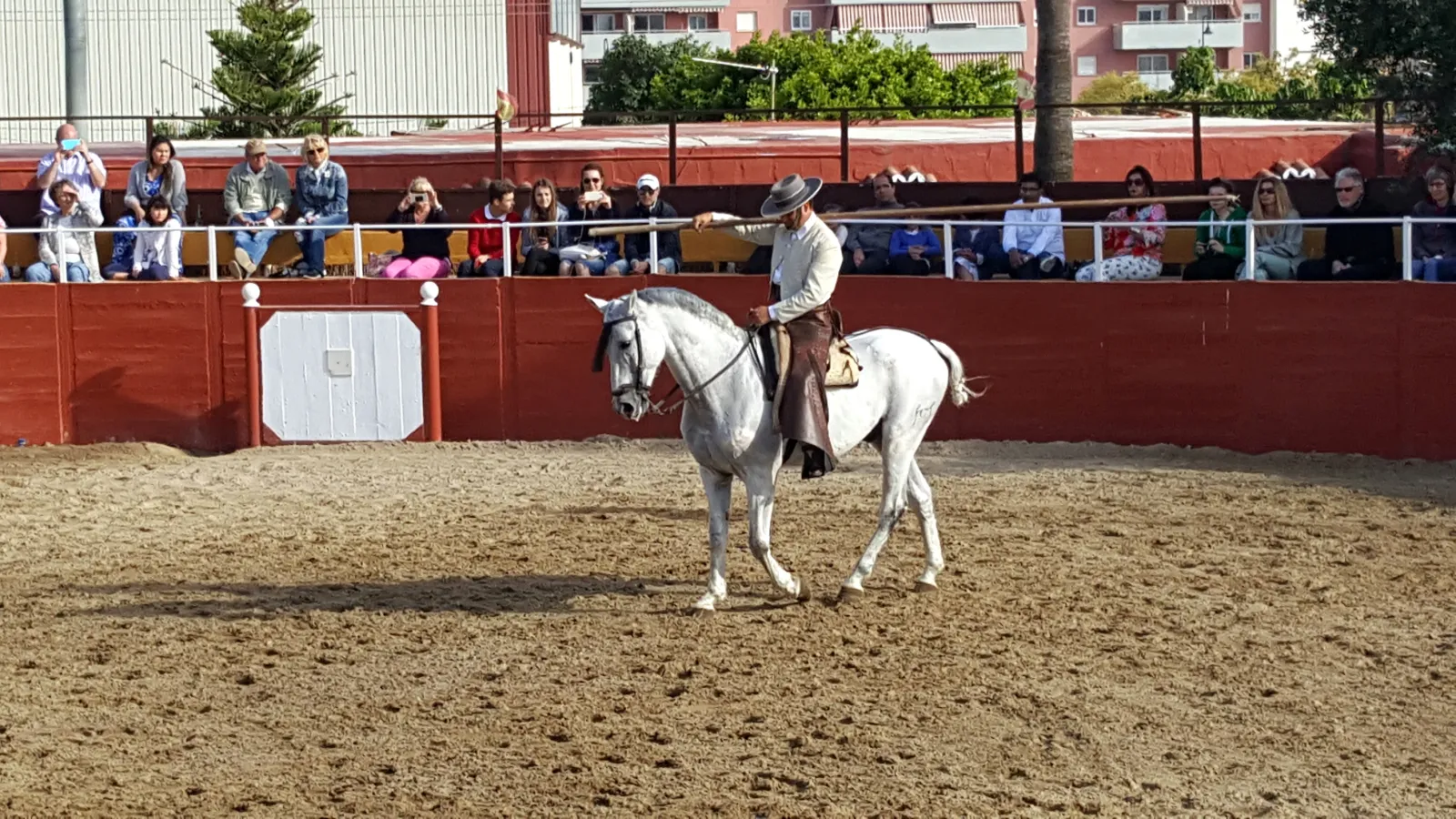
We have more than ten horses active, and another three in training. Each has its name, its personality, and its slot in the show. Argento, the eldest, opens the show with Haute École dressage. Brisa, a young mare, performs the garrocha. And Mistral, our stallion, always closes with the cobra.
"You don't break a horse with force. You break it with time, with patience, with love. If you bend it by force, you break it."
— Antonio Sánchez
The free visit to the stables
After the show, we open the doors. You can walk into the stalls, pet the horses, take photos, ask the riders questions. There's no time limit. It's what people enjoy most, and what brings us closest to the visitors.